Photography (Pinhole)
(pronounced /fәˈtɒɡrәfi/ [1]) (from Greek φωτο and γραφία) is the process, activity and art of creating still or moving pictures by recording radiation on a sensitive medium, such as a photographic film, or an electronic sensor. Light patterns reflected or emitted from objects activate a sensitive chemical or electronic sensor during a timed exposure, usually through a photographic lens in a device known as a camera that also stores the resulting information chemically or electronically. Photography has many uses for business, science, art and pleasure.
Genres Of Photography
· Aerial · Black and White · Commercial · Documentary · Fashion · Fine art · Forensic · Glamour · High speed · Illustration · Landscape · Nature · Paparazzi · Photojournalism · Portrait ·
![]() |
| Paparazzi Example: Paparazzi images are usually very unexpected pictures being taken of celebritys, most celebritys feel that they invade their personal space (which is why they have body guards). |
![]() |
| Fashion Example: Fashion photography is where fashion designers show off their creations by using models to pose in their outfits, it also shows latest trends. |
![]() |
| Landscape Example: Landscape images are very appealing to the eye, they show sceneary usually of wide open areas. |
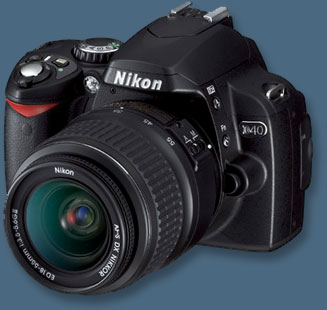
Camera
is a device that records images, either as a still photograph or as moving images known as videos or movies. The term comes from the camera obscura ( Latin for "dark chamber"), an early mechanism of projecting images where an entire room functioned as a real-time imaging system; the modern camera evolved from the camera obscura.
Shutter
In photography, a shutter is a device that allows light to pass for a determined period of time, for the purpose of exposing photographic film or a light-sensitive electronic sensor to light to capture a permanent image of a scene.
2,4,8,15,30,60,125,250,500 and 1000
Aperture
In optics, an aperture is a hole or an opening through which light travels. In Photography this can be measured in increments called f-stops.
Lens
The of a camera captures the light from the subject and brings it to a focus on the film or detector.
Exposure Control
The size of the aperture and the brightness of the scene controls the amount of light that enters the camera during a period of time, and the shutter controls the length of time that the light hits the recording surface. Equivalent exposures can be made with a larger aperture and a faster shutter speed or a corresponding smaller aperture and with the shutter speed slowed down.
![]() |
| Camera |
Shutter
In
![]() |
| Camera Shutter Speeds |
Aperture
In
Lens
The of a camera captures the light from the subject and brings it to a focus on the film or detector.
![]() |
| Camera Lens |
Exposure Control
The size of the aperture and the brightness of the scene controls the amount of light that enters the camera during a period of time, and the


No comments:
Post a Comment